Carolina Multisports cycling in the Blue Ridge Mountains

Blue Ridge Parkway Adventure Ride

History, Wildlife, and Wind in Your Hair

Discover the Blue Ridge Parkway by Bike

Join us in the spirit of camaraderie and sport on a 3-day cycling adventure through the Blue Ridge Mountains of North Carolina. The ride is self-paced and open to all abilities.

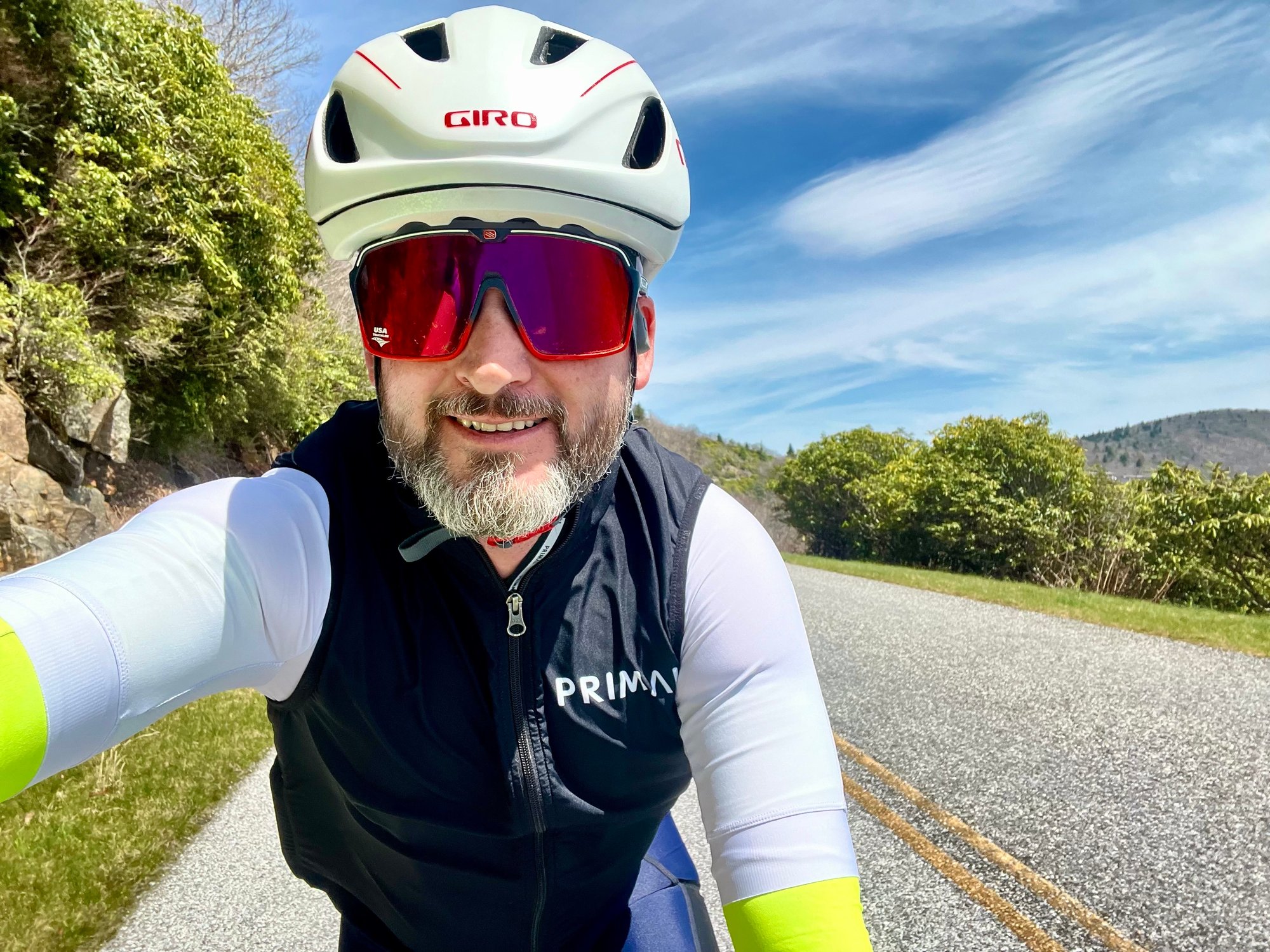
Coach Joel cycling on the Blue Ridge Parkway

A backdrop of captivating landscapes and rich cultural history

The Blue Ridge Parkway is a scenic highway that stretches for 469 miles along the spine of the greater Appalachian (pronounced, App-a-LATCH-an) mountain chain, connecting the Great Smoky Mountains National Park in North Carolina to Shenandoah National Park in Virginia. It was conceived during the Great Depression as part of the New Deal’s efforts to create jobs and stimulate the economy. Construction began in 1935, and the parkway was completed in 1987.

The parkway provides cyclists with an immersive experience as they pedal through a diverse range of ecosystems from rolling meadows to high altitude boreal forests. One of the highlights of the Blue Ridge Parkway is its numerous scenic overlooks, providing panoramic views of the surrounding mountains and valleys. These overlooks are perfect spots for participants to take a break, soak in the scenery, and capture memorable photos. Notable viewpoints include Craggy Gardens, Linville Viaduct, and Grandfather Mountain.

The Blue Ridge Parkway is intricately intertwined with the historical narrative of the Highlanders who first settled this rugged terrain. Hailing from Scottish and Irish immigrant roots, these Highlanders brought their rich cultural heritage of independence, durability, and resilience to the region, leaving an indelible mark on the landscape. This creates an unparalleled and motivational backdrop for personal development, where the spirit of the past converges with the journey of the present.

Pisgah Inn, Blue Ridge Parkway
Old Growth Fraser Fir at Mt. Mitchell on the Blue Ridge Parkway
Roadside ferns on Blue Ridge Parkway

Daily Agenda

Thursday, July 16, 2026
  • Arrive at Camp. Mt. Pisgah Campground
  • Enjoy Sliding Rock and Looking Glass waterfall.
  • Dinner in Brevard, TBD.
Friday, July 17, 2026
  • Breakfast in camp. (Bring something with you.)
  • Day 1 route to Richland Balsam, then returning back to camp.
  • Dinner in Brevard, TBD. 
Saturday, July 18,  2026
  • Break down camp. 
  • Breakfast in Asheville, TBD. 
  • Drive to Folk Art Center, 382 Blue Ridge Pkwy, Asheville, NC 28805
  • Day 2 route to Mt. Mitchell, then returning to car. 
  • Drive to camp at Julien Price Memorial Park, 297 Blue Ridge Pkwy, Blowing Rock, NC 28605
Sunday, July 19,  2026
  • Break down camp. 
  • Breakfast in Blowing Rock, TBD.
  • Day 3 Route to Linville Falls, then returning to car. 
  • Depart for home. 

Tunnels

The Blue Ridge Parkway features a total of 26 tunnels along its route, each contributing to the overall experience of biking through the picturesque mountain scenery. Tunnels were carefully placed and designed to blend with the environment. The architects and engineers aimed to ensure that the parkway provided a harmonious experience, allowing travelers to appreciate the scenic vistas without disruptions.

Day 1 – Mt. Pisgah to Richland Balsam

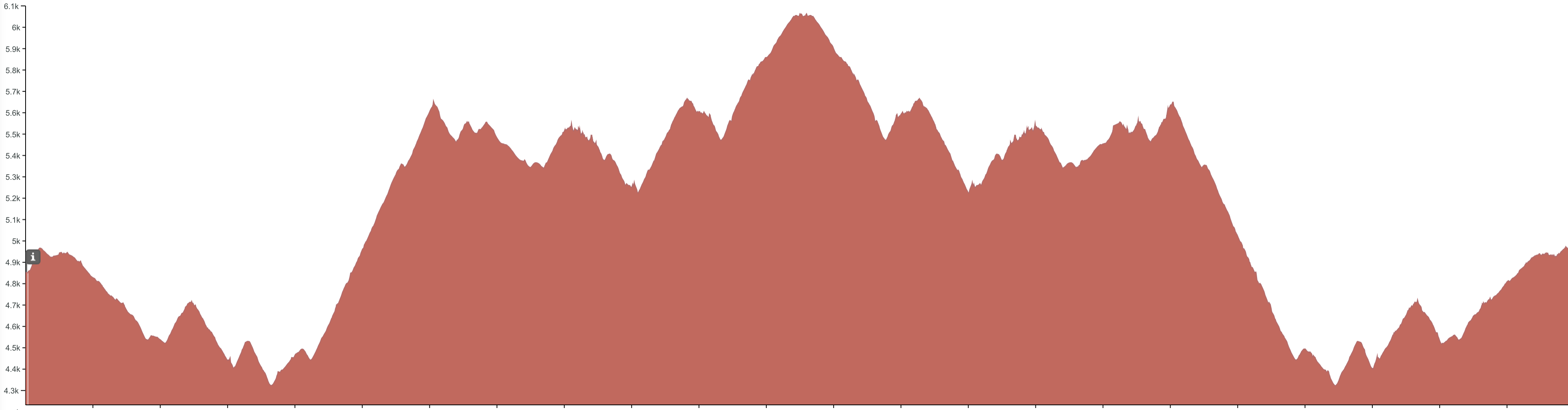
46 miles, 5,191' elevation gain

Mt. Pisgah Campground to Richland Balsam

Click for GPS File and Cue Sheet

Our first day on the Blue Ridge Parkway cycling adventure begins at the scenic Pisgah Campground, perched high in the Pisgah National Forest. From camp, we’ll follow the Parkway south, immediately surrounded by sweeping vistas of the Blue Ridge Mountains and dense hardwood forests.

Early in the ride, you’ll pass Devil's Courthouse where panoramic overlooks offer perfect photo opportunities. As you continue along the gently winding route, look for trailheads and scenic pull-offs like Fryingpan Tunnel Overlook and Graveyard Fields, a high-elevation valley known for its waterfalls and wildflowers.

The climb gradually intensifies as you approach Richland Balsam, the Parkway’s highest point at 6,053 feet. A sign marks this iconic spot, with the spruce-fir forest providing a cool, refreshing break from the climb. Pause to soak in the views and the sense of accomplishment before turning around for the return to camp.

The ride back rewards you with long, flowing descents and fresh perspectives of the mountain scenery. 

Mt. Mitchell

Mount Mitchell is the highest peak east of the Mississippi River and the highest point in the Appalachian Mountains at 6,684 feet (2,037 meters) above sea level. Due to its high elevation, Mount Mitchell experiences cooler temperatures than the surrounding lower elevations. The climate is often more reminiscent of northern regions, and the summit is home to a spruce-fir forest, a habitat more commonly found in the northeastern United States and Canada.

Day 2 – Folk Art Center to Mt. Mitchell

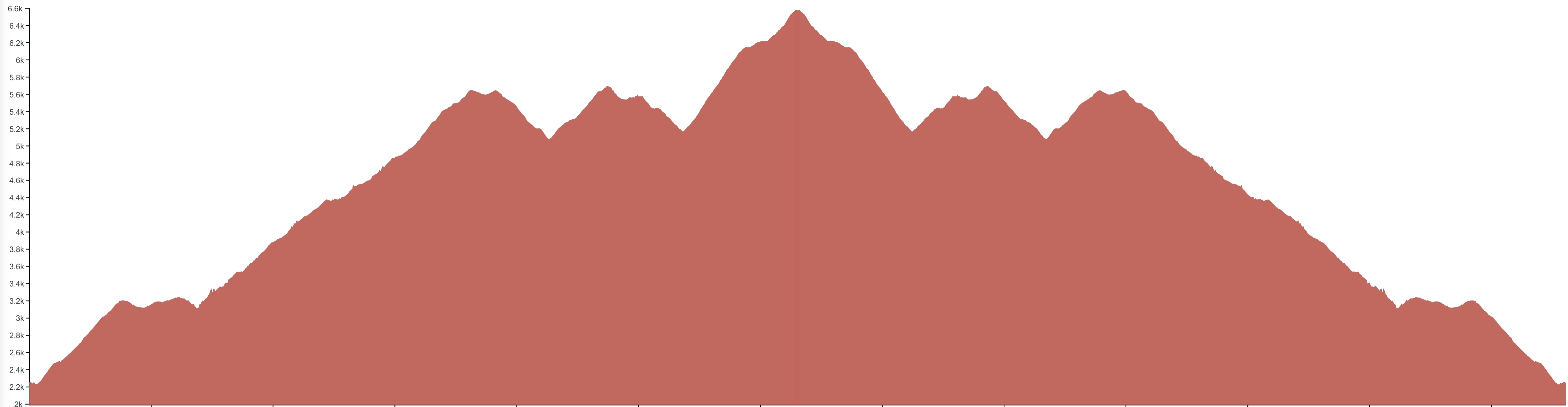
73 miles, 7,335' elevation gain
 

Folk Art Center to Mt. Mitchell

Click for GPS File and Cue Sheet

We'll begin Day 2 from the Folk Art Center in Asheville, NC, you set out on an unforgettable journey along the Blue Ridge Parkway toward the summit of Mt. Mitchell, the highest peak in the eastern United States at 6,684 feet. The ride begins with a gentle introduction to the Parkway’s scenic beauty—rolling hills, dense forests, and sweeping mountain vistas that hint at the challenges ahead.

As you climb, the road alternates between steady inclines and exhilarating descents, with overlooks offering breathtaking views of the Appalachian Mountains. Roughly 15 miles into the ride, Craggy Gardens provides a perfect rest stop. Here, you can refill water bottles, use the restrooms, and take a short break to enjoy the panoramic views and seasonal rhododendron blooms. The cool mountain air and lush surroundings make this a favorite pause for riders.

Continuing the ascent, the Parkway winds through tunnels and ridge lines, each turn revealing new perspectives on the rugged landscape. The final push up to Mt. Mitchell State Park is the most challenging but rewarding. Near the summit, the road twists through spruce-fir forests, feeling worlds away from the valley below.

At the top, the Mt. Mitchell summit area offers restrooms, water, and a welcome chance to recover. You can take a short walk to the observation deck for a 360-degree view of the Blue Ridge Mountains, stretching into several states. Other points of interest include the park’s museum and interpretive displays about the mountain’s unique ecology and history.

Bring layers as you'll cool off quick at the summit along with the long descent.

Linn Cove Viaduct

The Linn Cove Viaduct is an engineering marvel and a notable feature of the Blue Ridge Parkway. Construction of the Linn Cove Viaduct began in 1979 and was completed in 1983. The viaduct was designed to minimize the environmental impact on Grandfather Mountain, a region known for its ecological diversity and rugged terrain. It represents the final link to complete the entire 469-mile length of the Blue Ridge Parkway.

Day 3 – Linville Falls and Linn Cove Viaduct

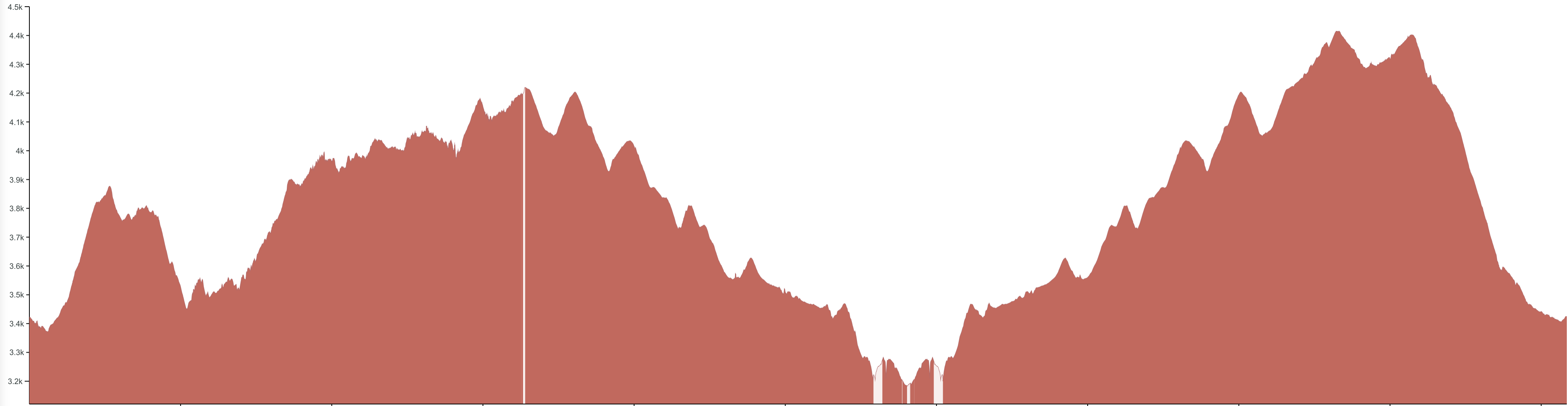
51 miles, 4,283' elevation gain


Julien Price Memorial Campground to Linville FallsClick for GPS File and Cue Sheet

Day 3 starts at Julien Price Memorial Park. We set off along the scenic Blue Ridge Parkway, greeted immediately by sweeping views of the surrounding mountains and forests. Early in the ride, the route drops off the parkway onto US Highway 221, fondly known as the “Little Parkway.” This stretch offers quieter roads and a winding descent through lush, shaded woodlands, giving a more intimate and peaceful ride compared to the broader parkway vistas.

Pedaling along 221, we gradually work our way toward the iconic Linville Falls. Here, we enjoy a perfect mid-ride pause—refilling water bottles, using the restrooms, and taking in the beauty of the cascading waterfalls with a short walk that make this stop memorable. The combination of cool mist and the sound of rushing water provides a refreshing reset before the final leg of the adventure.

The ride crescendos as we return to the Blue Ridge Parkway and traverse the famous Linn Cove Viaduct. Curving gracefully along the edge of Grandfather Mountain, the viaduct delivers an unforgettable finale with panoramic views that make the climb well worth the effort. Ending the journey here captures the essence of a quintessential Blue Ridge cycling adventure—challenging, scenic, and absolutely rewarding.

Waterfall below the Blue Ridge Parkway along US Hwy 221
Mile Post 356 on the Blue Ridge Parkway
Blue Ridge Parkway Sign